
harvestgreen22
New member
- Joined
- Nov 11, 2026
- Messages
- 1
- Reaction score
- 1
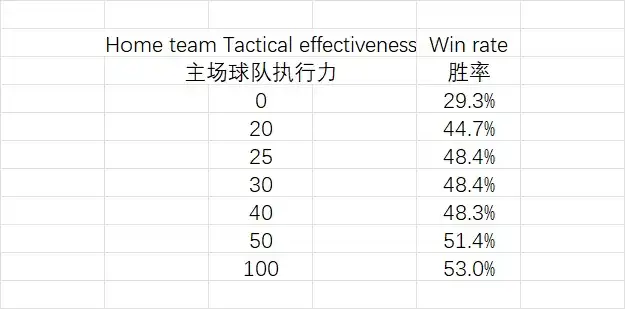
This is the test result I previously posted on sortitoutsi.
Here is a brief overview of my earlier testing process:
1. In the first test, I used FMRTE, which allowed me to view and set "Tactical effectiveness" to its maximum value as early as the first week game launch.
— Assuming the tool was functioning correctly, I compared two scenarios—one with no modifications and one where the value was set to the maximum—and concluded that there was very little change in the win rate (+3.5%).
In reality, however, FMRTE had a bug during the first-week-game-launch that prevented it from modifying most of the sub-components of "Tactical effectiveness." Consequently, the actual increase in "Tactical effectiveness" was few.
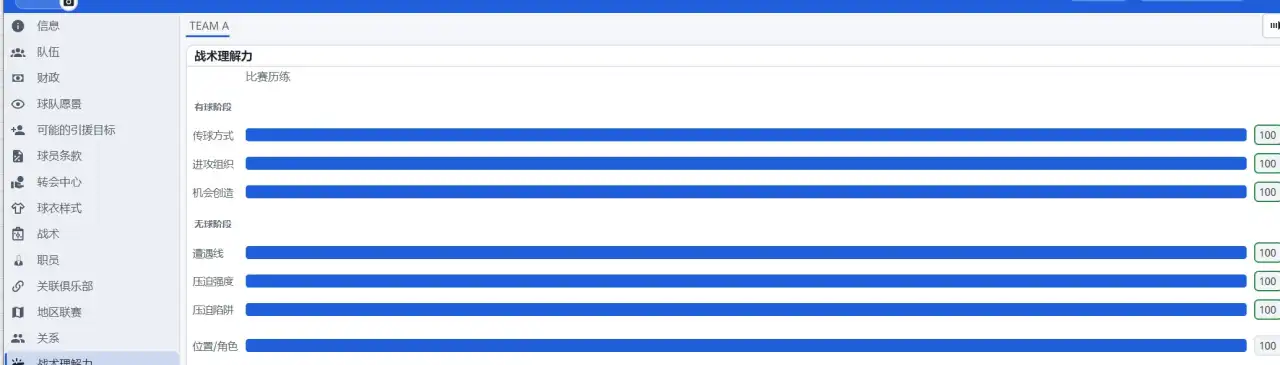
Nevertheless, the user interface (UI) falsely continuous indicated that "all options" had been set to their maximum values, which led me to the wrong conclusion.
2. For the second test, I used the tactical testing tool developed by playgm lqf0624: GitHub - lqf0624/fm-tactics-lab: FM 战术实验室 · Batch tactical experiments with the original FM27 detailed match engine. Windows desktop app and MIT-licensed tool source..
I analyzed win rates across a "Tactical Effectiveness" range of 0–100, based on over 36,000 simulated matches. The conclusion remains the same: win rates show little variation between 25 and 100, with significant impact only within the 0–25 range.
—However, this tool likely omits certain calculation logic, meaning its results may not fully reflect the actual behavior within the game.
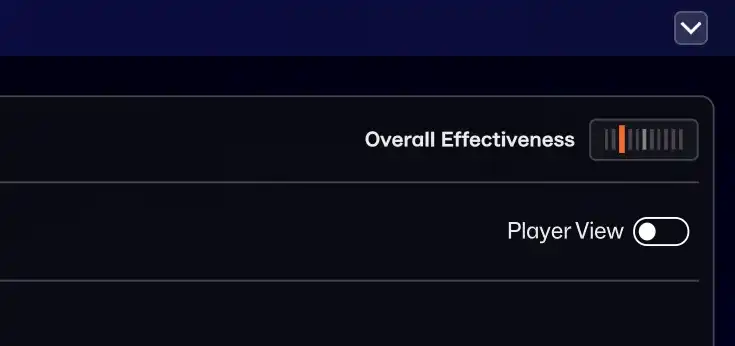

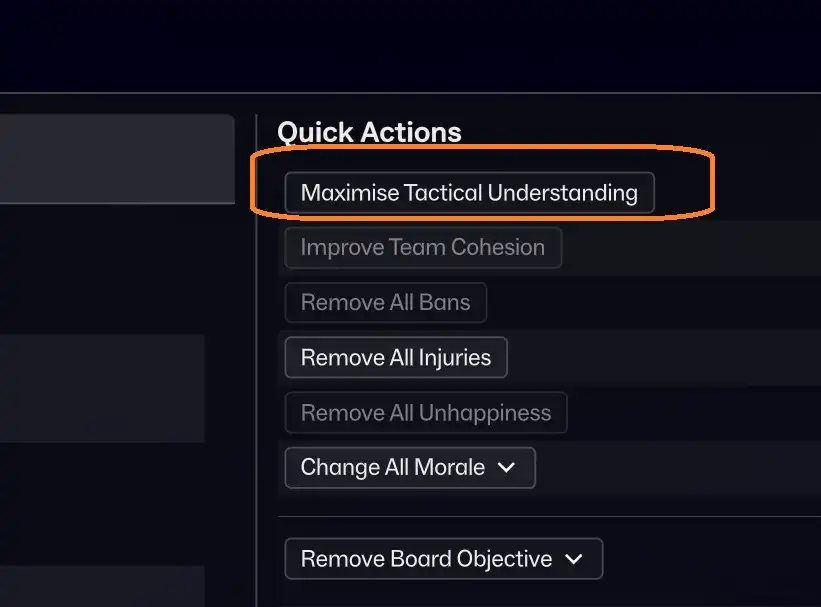
3. For the third test, in order to gain clarity, I purchased the "in-game editor," which includes an option called "Maximum Tactical Understanding."
————This allowed me to directly compare "Tactical effectiveness" (displayed as "Overall Effectiveness" in-game) under two different conditions in the real game:
One scenario was unedited, with a Tactical effectiveness of 30%.
The other was edited, with a Tactical effectiveness of 70%.
All other variables were locked using FMRTE, leaving Tactical effectiveness as the sole variable.
However, since Tactical effectiveness Decays Quickly Automatically every week,
————I paused the simulation each week to manually re-apply the "Maximum Tactical Understanding" setting, repeating this process until the end of the season.
After testing over five seasons and calculating the averages:
————Unedited: 50% wins, 29% losses.
————Edited: 63% wins, 17% losses.
The disparity is quite significant. Increasing Tactical effectiveness by 40 points—from 30 to 70—resulted in a substantial shift in the win rate (63% - 50% = 13%).
4. If it truly has a significant impact, then it is worth developing to a high level; a 13% effect resulting from a 40-point change is quite substantial.
The main issue right now is that this "Tactical Understanding" decays far too quickly. While ,
Furthermore , heavily on "Tactical Understanding" reduce training grow , and increases a lot of risk of injury.
5. By controlling for time, I discovered that the growth and decline of AI-managed teams follow a different pattern than those managed by human coaches.
Given players and coaches with identical attributes, both "Tactical Understanding" and "Tactical Effectiveness" increase more rapidly under the AI.
This implies that, over time—at least during the first season—the AI gains an advantage over human players.
6. Now, waiting for an official update next week ; I expect it to at least fix the issue where the stat decays too quickly—or perhaps make "Tactical Understanding" training more efficient.
training excel:

 pixeldrain.com
Then, along with the training test files,
this is something unrelated to the topic.
It's just that it has been recently updated and I uploaded it here.
Here is a brief overview of my earlier testing process:
1. In the first test, I used FMRTE, which allowed me to view and set "Tactical effectiveness" to its maximum value as early as the first week game launch.
— Assuming the tool was functioning correctly, I compared two scenarios—one with no modifications and one where the value was set to the maximum—and concluded that there was very little change in the win rate (+3.5%).
In reality, however, FMRTE had a bug during the first-week-game-launch that prevented it from modifying most of the sub-components of "Tactical effectiveness." Consequently, the actual increase in "Tactical effectiveness" was few.
Nevertheless, the user interface (UI) falsely continuous indicated that "all options" had been set to their maximum values, which led me to the wrong conclusion.
2. For the second test, I used the tactical testing tool developed by playgm lqf0624: GitHub - lqf0624/fm-tactics-lab: FM 战术实验室 · Batch tactical experiments with the original FM27 detailed match engine. Windows desktop app and MIT-licensed tool source..
I analyzed win rates across a "Tactical Effectiveness" range of 0–100, based on over 36,000 simulated matches. The conclusion remains the same: win rates show little variation between 25 and 100, with significant impact only within the 0–25 range.
—However, this tool likely omits certain calculation logic, meaning its results may not fully reflect the actual behavior within the game.
3. For the third test, in order to gain clarity, I purchased the "in-game editor," which includes an option called "Maximum Tactical Understanding."
————This allowed me to directly compare "Tactical effectiveness" (displayed as "Overall Effectiveness" in-game) under two different conditions in the real game:
One scenario was unedited, with a Tactical effectiveness of 30%.
The other was edited, with a Tactical effectiveness of 70%.
All other variables were locked using FMRTE, leaving Tactical effectiveness as the sole variable.
However, since Tactical effectiveness Decays Quickly Automatically every week,
————I paused the simulation each week to manually re-apply the "Maximum Tactical Understanding" setting, repeating this process until the end of the season.
After testing over five seasons and calculating the averages:
————Unedited: 50% wins, 29% losses.
————Edited: 63% wins, 17% losses.
The disparity is quite significant. Increasing Tactical effectiveness by 40 points—from 30 to 70—resulted in a substantial shift in the win rate (63% - 50% = 13%).
4. If it truly has a significant impact, then it is worth developing to a high level; a 13% effect resulting from a 40-point change is quite substantial.
The main issue right now is that this "Tactical Understanding" decays far too quickly. While ,
Furthermore , heavily on "Tactical Understanding" reduce training grow , and increases a lot of risk of injury.
5. By controlling for time, I discovered that the growth and decline of AI-managed teams follow a different pattern than those managed by human coaches.
Given players and coaches with identical attributes, both "Tactical Understanding" and "Tactical Effectiveness" increase more rapidly under the AI.
This implies that, over time—at least during the first season—the AI gains an advantage over human players.
6. Now, waiting for an official update next week ; I expect it to at least fix the issue where the stat decays too quickly—or perhaps make "Tactical Understanding" training more efficient.
training excel:
训练excel Training excel (20261115 Ver5) .xlsx
This file has been shared with you on pixeldrain
pixeldrain.com
Then, along with the training test files,
this is something unrelated to the topic.
It's just that it has been recently updated and I uploaded it here.